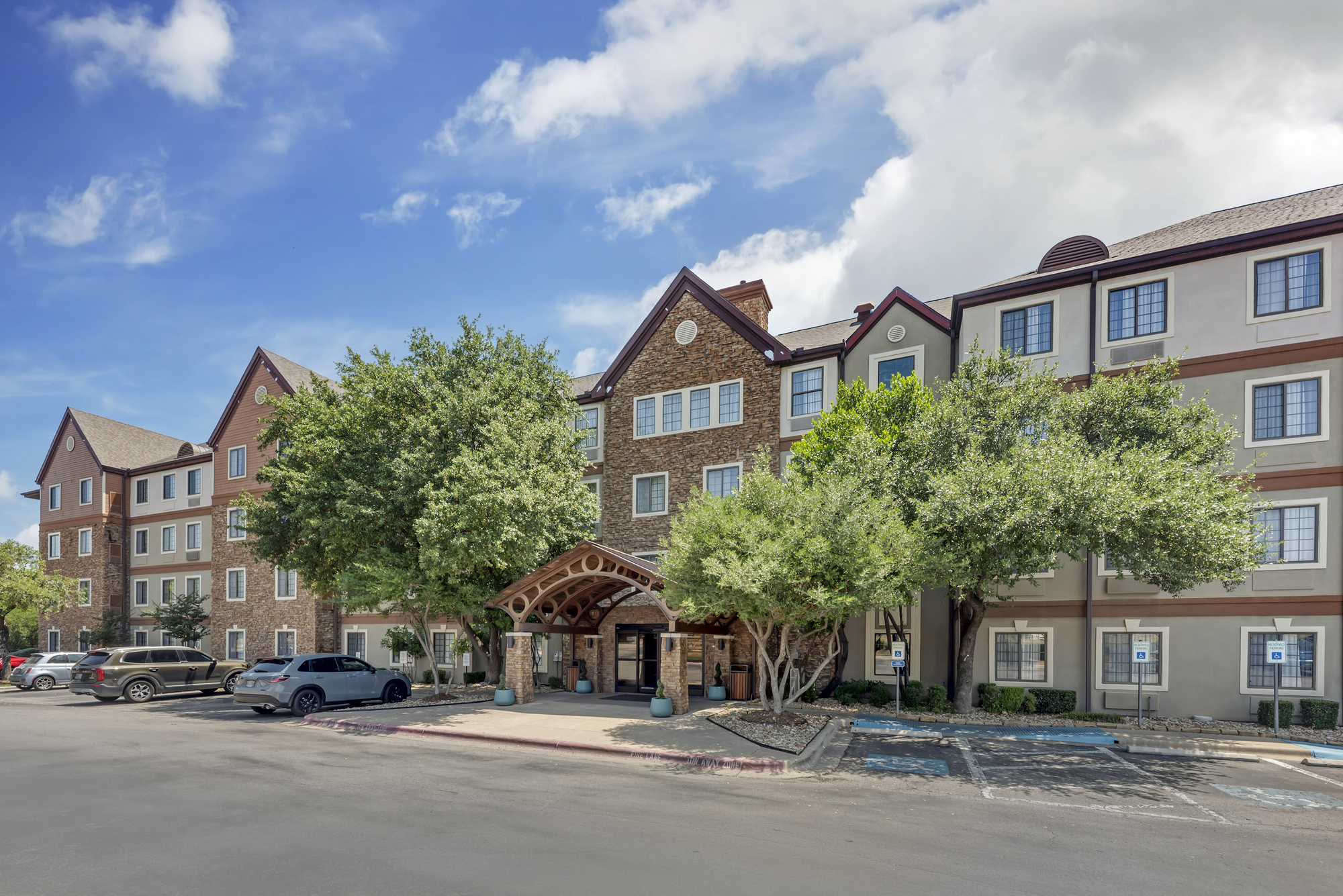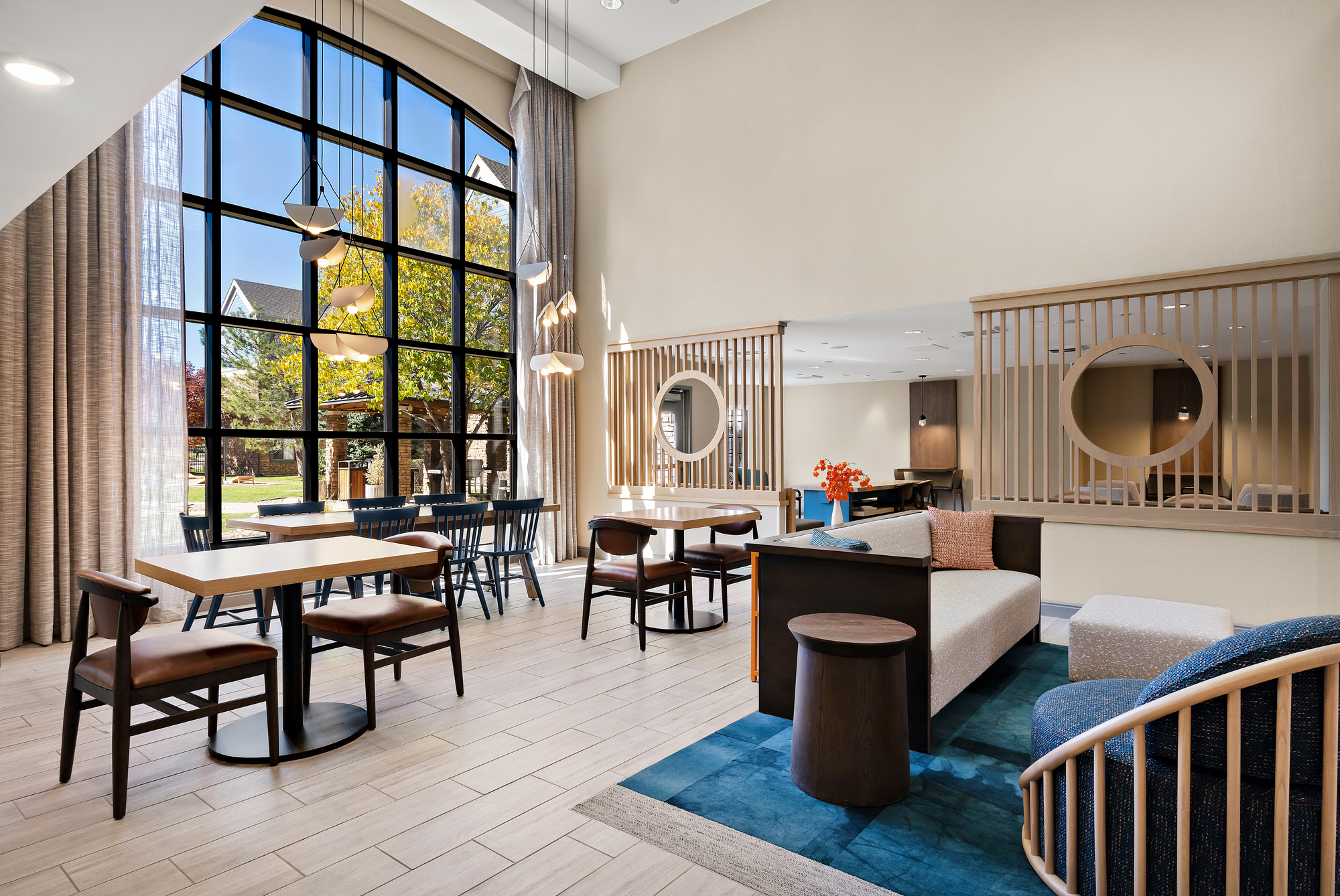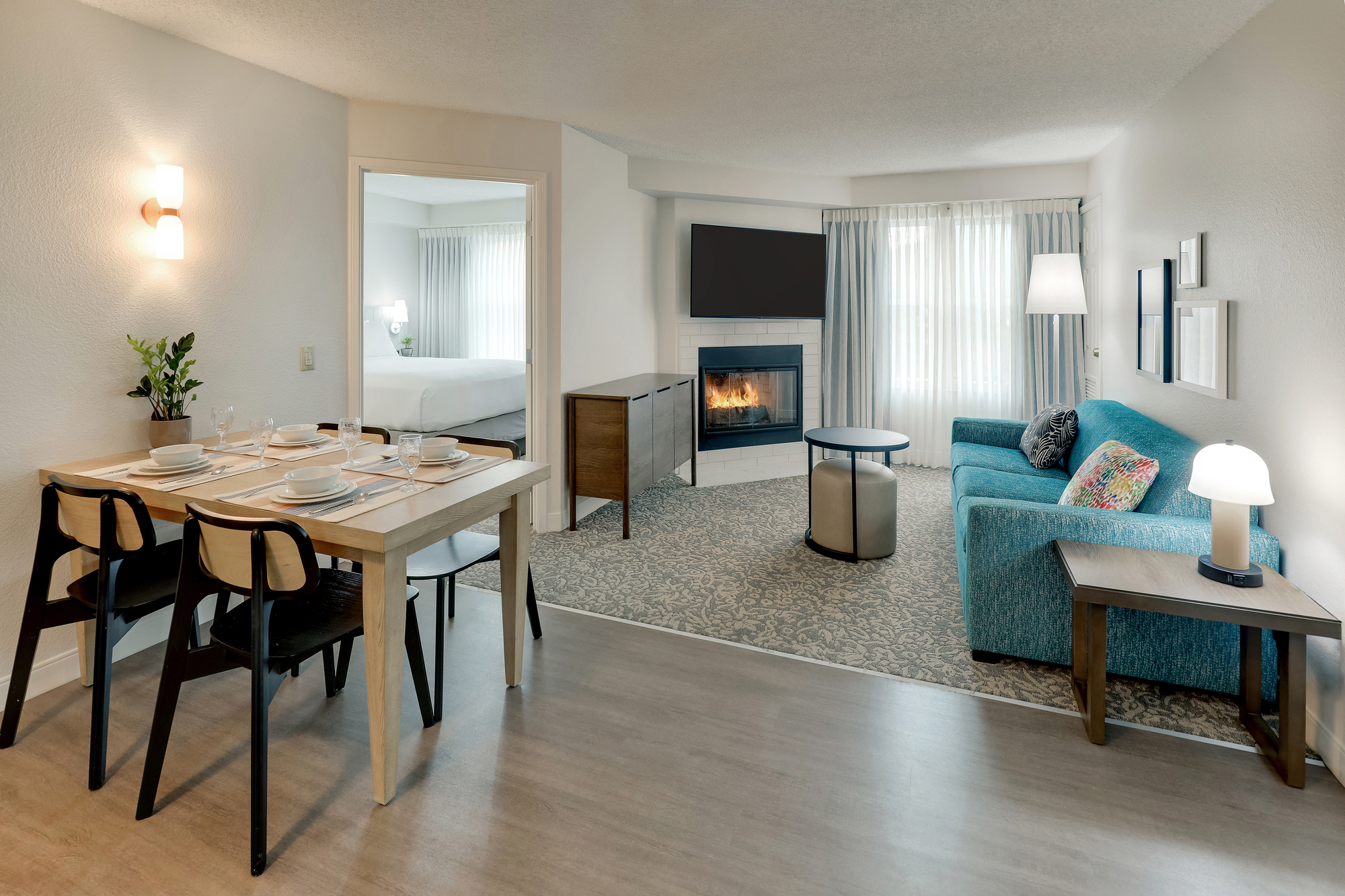
Any hotel booking of five consecutive nights or longer qualifies as an extended stay¹, and at that threshold, the hospitality model shifts from a temporary room to a temporary apartment.
The rate structure steps down the longer you stay, the room infrastructure is built for cooking and laundry rather than just sleeping.
Once you factor in kitchen use, on-site laundry, and the weekly rate discount, the suite outperforms a standard room on cost and function.
At a Glance
- The hospitality industry defines an extended stay as any continuous booking of five or more consecutive nights, a threshold at which the operational model, rate structure, and room infrastructure shift fundamentally from transient travel
- The category divides into three duration sub-segments: short-term (5–11 nights), mid–term (12–29 nights), and long-term (30+ nights), each with different functional requirements and rate structures
- Past the five–night mark, kitchen savings, weekly rate discounts, and local tax exemptions make the extended stay suite a financially better alternative to a standard hotel room on an all-in daily cost basis
What “Extended Stay” Means
At the 5-night threshold, extended stay properties trade high-turnover amenities like daily housekeeping and front desk staffing for residential-style infrastructure such as fully equipped kitchens, in-suite laundry access, and weekly rate structures.
The category divides into three duration sub-segments:
- Short–term extended stay (5–11 nights): The bleisure zone, bridging business and leisure travel. Guests require basic self-sufficiency: a kitchen, reliable Wi-Fi, and a functional workspace.
- Mid–term extended stay (12–29 nights): Corporate assignments, training rotations, regional relocations. Guests need full residential functions including cooking capability, laundry access, and spatial separation between work and sleep. Weekly rate structures may apply.
- Long–term extended stay (30+ nights): Permanent relocations, temporary medical residencies, long-term consulting contracts. Monthly rate structures produce the most significant per-night savings. Guests are effectively living in the property.
The right room type, standard or suite, depends on which sub-segment the stay falls into.

Extended stay properties include fully equipped kitchens, ideal for preparing your own meals during a long stay.
Extended Stay Hotels vs. Regular Hotels: What the Room Includes
Extended stay hotels differ from standard hotels in infrastructure.
Here is how the two compare across the four variables that matter most for a stay of 5 nights or longer:
- Kitchen: Extended stay properties include kitchens with stovetop, full-size refrigerator, microwave, and basic cookware. Standard hotel rooms offer at best a kitchenette with a mini-fridge and microwave.
- Housekeeping: Standard hotel rooms receive daily service: beds are made, towels replaced and surfaces are wiped. Extended stay suites operate on a weekly model with a deeper clean once per week. Fresh towels are available on request between service days at most properties.
- Workspace. Extended stay suites include dedicated desk areas, additional outlets, and spatial separation from the sleep area. Standard rooms compress the workspace into a small multi-use surface adjacent to the bed.
- Rate structure. Standard hotel rates are set per night at a transient rate. Extended stay rates step down the longer you stay.
For a one-night stay, none of these differences matter much. For two weeks, all of them do.
🧳 Your Next Chapter: Extended Stay vs. Furnished Rental Real Costs for 30+ Days
The 5-Night Tipping Point: Where the Math Shifts
Past the five-night mark, the extended stay suite is frequently the less expensive option once kitchen savings, weekly rate discounts, and local tax exemptions are factored into the all-in daily cost.
The Kitchen Math
According to Numbeo cost-of-living data², the average cost of a mid-range restaurant meal for two in the U.S. runs approximately $77. A single inexpensive meal averages $20. A solo traveler eating out three times a day over 6 nights spends $360 at minimum, realistically $500–$700 once taxes and tips are included.
Cooking most meals in a suite kitchen cut that cost by roughly 60%.
The Rate Step-Down
At the 7-night threshold, extended stay properties typically apply a weekly discount of 15–30% off the base nightly average.
Booking a standard hotel for 7 nights means paying the transient rate 7 times. Booking an extended stay suite for the same 7 nights unlocks a weekly rate discount and includes the kitchen and laundry infrastructure.
At the 30-night threshold, monthly discounts deepen further, typically 35-45% below the base nightly rate.
The Tax Exemption
In many U.S. markets, like San Francisco³, which waives its 14% hotel tax on day 31, stays of 30 or more consecutive nights are exempt from local transient occupancy taxes, a saving of 10–15%.
Guests paying $120 per night in San Francisco, where the 14% hotel tax is waived once a stay hits 30 consecutive nights, save $504 on the tax exemption alone over a 30-night stay before the monthly rate discount is applied.
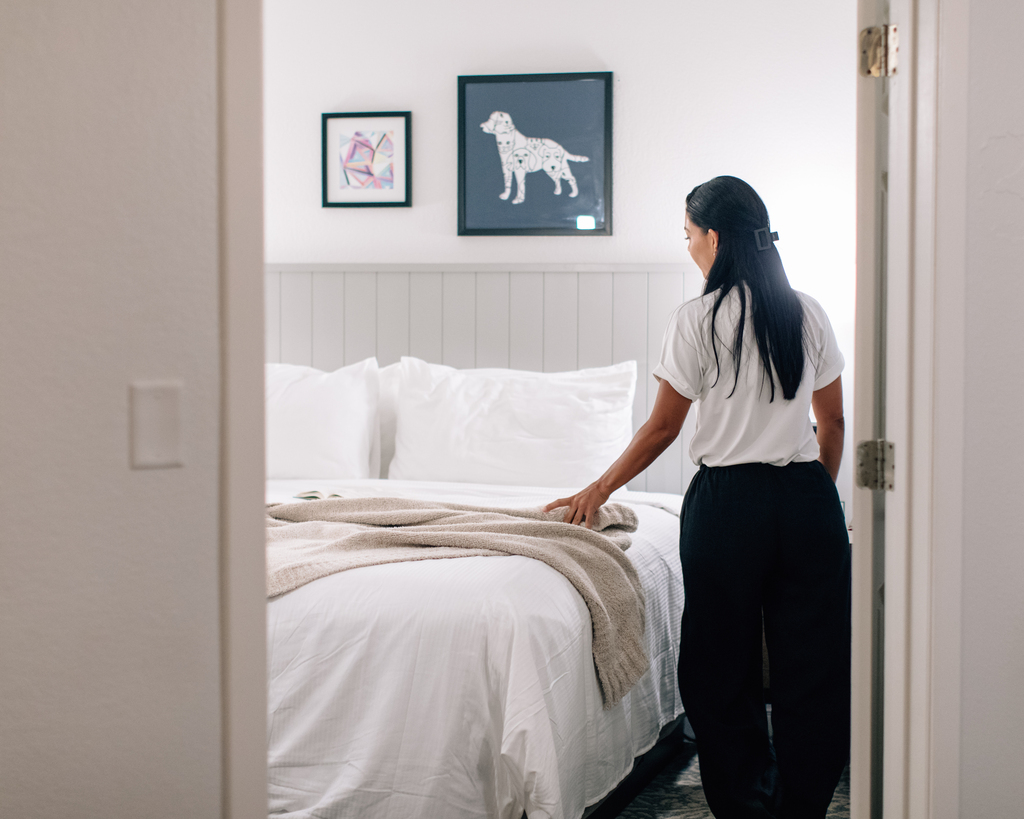
The suite often costs less per night than the standard room’s transient rate.
Three Signs You Should Book a Suite Instead of a Standard Room
Most travelers default to a standard room out of habit. A suite is the right call in three situations.
Sign 1: Your Stay Runs Longer Than Four Nights
The hospitality industry defines extended stay at the 5-night threshold for a reason. Before that point, a standard room is a place to sleep between activities. After five nights, the room becomes the base of operations, where you work, eat, recover, and start the next day.
A standard room hotel room is not designed for that use pattern.
On top of that, past the four-night mark, the standard hotel room starts working against you. Studies⁴ suggest that environmental conditions in a work-and-sleep space can influence both sleep duration and next-day cognitive performance.
Also, at the 5-night weekly rate breakpoint, the suite often costs less per night than the standard room’s transient rate anyway, so the upgrade frequently pays for itself.
Sign 2: You Have a Routine
Most extended stays are not for vacations. They are designed for work relocations, contract assignments, medical stays, or renovation displacements, trips where you need to function at the same level you do at home.
If you exercise in the morning, a suite gives you enough floor space to stretch, use a resistance band, or follow a workout without rearranging furniture. If you manage a child’s bedtime, a separate bedroom means the child goes to sleep at 8 PM without negotiating noise levels through a shared wall.
The suite is built around the assumption that you have a life to maintain.
Sign 3: The Room Needs to Function as More Than a Place to Sleep
When a stay involves cooking, childcare, remote work, or caring for a pet, a standard room runs out of functional space quickly.
Competing sleep schedules, shared surfaces, and limited floor space are manageable for one night. Over multiple nights they compound into a stay that feels harder than it should.
Suites separate the sleeping area from the living area, give the kitchen a dedicated space, and create enough room for each person or activity to have its own corner.
🧳 Your Next Chapter: Suite with Kitchen vs. Hotel Discount: Which Saves You More?
Frequently Asked Questions About Extended Stay Hotels
The most common questions travelers have before booking an extended stay hotel answered.
What is the minimum stay for an extended stay hotel?
Minimum stay requirements vary by brand and property. Some extended stay properties accept bookings of any length at the base transient rate, while others enforce a 7 or 30-night minimum.
Most Sonesta ES Suites and Simply Suites hotels do not have a minimum stay requirement.
Confirming the specific minimum at the property before booking is especially important for stays in the 5 to 10 night range, where availability and rate structures can differ significantly from the brand standard.
Can you stay at an extended stay hotel for just one or two nights?
Most extended stay properties accept bookings of any length, though weekly and monthly rate discounts only apply at the 5-night and 30-night thresholds.
Sonesta ES Suites and Simply Suites both accept one- and two-night stays at most locations, with the weekly rate applying automatically once a stay reaches 5 nights.
Short stays of one or two nights are typically priced at the base transient rate without the weekly discount applied.
What is the difference between an extended stay hotel and a serviced apartment?
Extended stay hotels are hotel-managed with front desk support, housekeeping, and loyalty program integration, while serviced apartments are typically privately managed with less operational support, no loyalty earn, and a lease-style booking structure.
Sonesta ES Suites and Simply Suites both include Sonesta Travel Pass earning on every stay, a distinction most serviced apartment providers don’t offer.
Extended stay hotels offer more flexibility on check-in, check-out, and cancellation terms than most serviced apartment providers.
Can I bring my pet to an extended stay hotel?
Most extended stay brands permit pets, but fee structures vary significantly by property and brand tier. Extended stay properties typically charge a flat per-stay fee rather than a per-night fee.
Sonesta ES Suites and Simply Suites both allow pets at most locations, with the exact fee and any weight or breed restrictions set at the property level.
Confirming species permissions, weight limits, and the total pet fee for the specific stay length before booking prevents surprises at check-in.
What happens if I need to extend my stay last minute?
Extended stay properties are designed for flexible timelines and typically accommodate booking extensions more easily than standard hotels, where nightly inventory fluctuates more dramatically.
At Sonesta ES Suites and Simply Suites, extending an existing reservation is typically handled directly at the front desk rather than as a new booking.
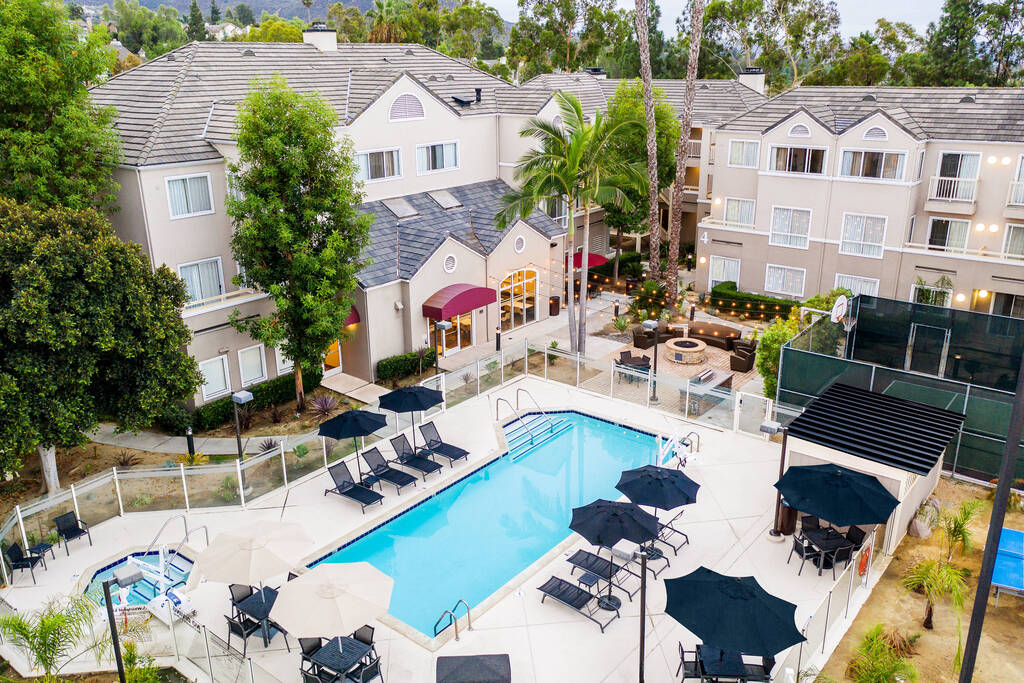
Amenities at extended-stay properties such as pools, fitness centers, and outdoor spaces are designed for guests who are there for weeks.
Sonesta Extended Stay Options
Sonesta operates two extended stay brands that serve different traveler profiles at different price points. Both include fully equipped kitchens, weekly housekeeping, and rate structures that step down at 5 nights and 30 nights.
Sonesta ES Suites
Sonesta ES Suites is an apartment-style extended stay brand designed for stays of a week or longer.
Properties include suites with fully equipped kitchens with a stovetop, full-size refrigerator, microwave, and basic cookware, along with free Wi-Fi, on-site fitness centers, swimming pools, shared laundry, and outdoor spaces including The Yard.
Complimentary daily breakfast is available at selected properties, and the two-bedroom suite layout provides the room separation that families and multi-person groups need for a sustainable daily routine across multi-week stays.
Pets are welcome at most locations with a nightly fee.
Sonesta Simply Suites
Sonesta Simply Suites is an extended stay brand built for longer-term stays where function takes priority over amenities.
Properties include fully equipped kitchens, free Wi-Fi, 24-hour gym access, shared laundry, and complimentary morning coffee without the breakfast program, community outdoor spaces, or larger suite layouts that ES Suites offers.
For a solo traveler or couple who needs a kitchen and a workspace at a lower rate point, Simply Suites delivers the extended stay model without the amenity overhead. Pets are welcome at most locations.
🧳 Your Next Chapter: Which Sonesta Brand to Choose for Your Next City Stay
Book Direct, Book Sonesta
The suite becomes the right call when the stay is long enough, and the spatial requirements are complex enough that a standard room stops meeting the need.
Book direct at sonesta.com to access member-only rates and confirm which suite layout fits you best before arrival.
The one rule that applies to almost every loyalty program is to join before you book your accommodation. Member rates apply at the time of reservation.
References:
- Glossary, CoStar
- Cost of living in US, Numbeo
- Transient Occupancy Tax (TOT)
- The Impact of Optimized Daylight and Views on the Sleep Duration
Disclaimer: The suggested itinerary and points of interest are provided for informational and planning purposes only. Guests are encouraged to independently verify opening hours, availability, travel times, and any potential changes prior to visiting. The inclusion of any businesses, attractions, or destinations does not imply affiliation with or endorsement by Sonesta or its affiliates. Sonesta makes no representations or warranties regarding the accuracy or completeness of the information provided and assumes no responsibility for any inconvenience or loss arising from the use of this information.