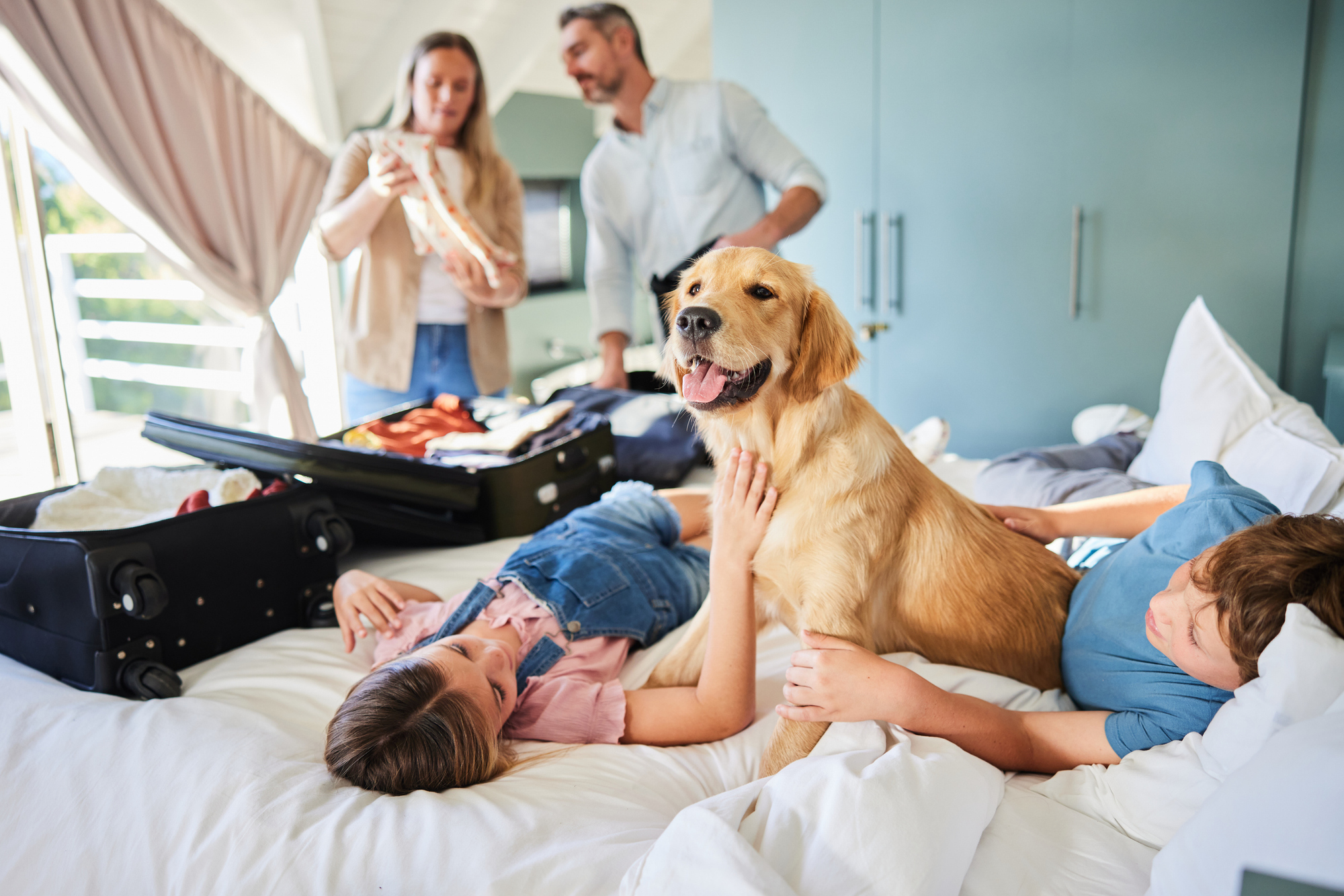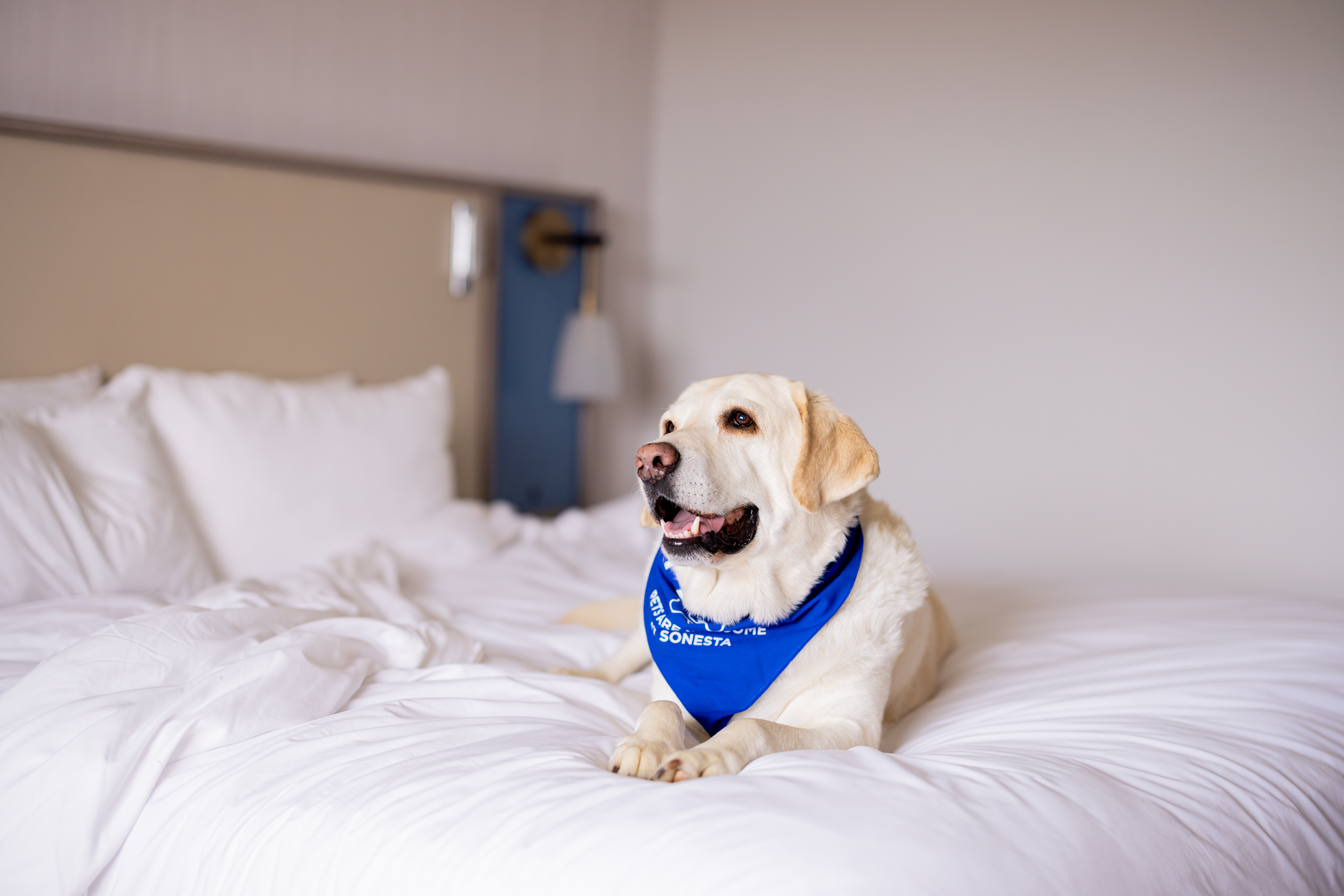
The “pet-friendly” label covers a wide range of experiences, from a signed waiver and a grass strip near the parking lot to a dedicated program with welcome amenities, flat per-stay fees, and no breed or weight restrictions.
Knowing which one you are booking comes down to five things: species permissions, weight limits, breed restrictions, fee structure, and the unattended pet policy.
The team behind our PAWS (Pets Are Welcome at Sonesta) program will walk you through all five, plus the ten questions to ask the property before you confirm your pet-friendly stay.
At a Glance
- The “pet–friendly” label has no standardized industry definition; a property that permits pets and one with a structured pet program both use it, with no visible distinction on most booking platforms
- Ten questions cover everything a booking platform listing does not disclose such as species rules, fee totals, relief area location, unattended pet policy, and documentation requirements
- Sonesta’s PAWS program addresses breed restrictions, weight limits, fee structure, and in–room amenities across the portfolio, with flat per–stay fees at every tier
- Individual property exceptions apply. Two minutes on the phone with the front desk before booking resolves every variable the listing page leaves open
What “Pet-Friendly” Means
The “pet-friendly” label on a hotel listing has no standardized definition across the industry. It is used by both properties that permit pets and properties with a structured pet program, with no visible distinction on most booking platforms.
In practice, the label covers two very different stays.
- The bare minimum. Check-in includes a signed waiver, outdoor space near the parking lot, and a per-night pet fee that accumulates across the stay. The hotel welcomes pets but the room and the experience are not designed around them.
- The structured program. Pets arrive to loaner beds, food and water bowls, feeding mats, and a welcome bag with treats and waste bags. Dedicated pet-relief areas with waste stations sit close to the guest room buildings. Flat per-stay fees and a documented policy cover every variable a traveling pet owner needs to know before arrival.
Most properties sit somewhere between the two. Five pet policy variables determine where.
🧳Next Chapter: Toy-Dog-Approved Summer Destinations: Guide to a Pawsome Vacation
The Five Policy Variables That Determine Whether a Hotel Works for Your Pet
Five variables determine whether a pet-friendly hotel actually works for your trip: species permissions, weight limits, breed restrictions, fee structure, and the no-leave policy. Booking platforms rarely disclose all five.
Calling the property directly before confirming is the most reliable way to get answers on each one.
1. Species Permissions
Most hotels default to dogs, so “pet-friendly” means “dog-friendly.” Properties that list as pet-friendly may not extend that welcome to cats, whose dander can embed in carpeting and soft furnishings and require additional remediation between guests.
Small caged animals like birds, hamsters, and guinea pigs are frequently outside the policy due to noise and escape risk.
Guests traveling with cats, birds, or small mammals should call the property and confirm which species are permitted before booking.
2. Weight and Size Limits
Standard industry weight thresholds cluster at 25, 50, and 75 pounds, but properties apply those limits differently and rarely explain the specifics on the booking page.
One property’s 50-pound limit may mean one dog under 50 pounds; another may apply it as a combined weight across multiple pets, which affects two-dog households even when neither dog individually exceeds the threshold.
Size restrictions can also operate separately from weight. Some properties restrict dogs by shoulder height or frame size regardless of weight.
Call and ask specifically whether the restriction applies by weight, by breed, or by both.
3. Breed Restrictions
Many hotel chains restrict specific breeds such as Pit Bulls, Rottweilers, German Shepherds, and Dobermans through corporate insurance policies that are not visible on the listing page.
Guests traveling with commonly restricted breeds should call the property and confirm by breed name before booking.
Breed restrictions are the most common source of booking surprises for pet travelers and the least visible variable on any booking platform.
4. Fee Structure
Three distinct charging models exist across the industry, each with different implications for trip cost:
- Per–night fee. At $25 per night, a 7-night stay adds $175 to the room cost, a figure that does not appear prominently on most booking confirmation screens. For stays of 14 or 30 nights, per-night fees can exceed the room rate itself.
- Flat per–stay fee. Charged once regardless of stay length. For trips of 5 nights or more, a flat fee is almost always the better financial structure. Confirm whether it resets on a weekly or monthly basis for extended stays.
- Non–refundable deep cleaning deposit. Charged upfront and not returned at checkout. Some properties charge this in addition to a per-night or per-stay fee. Confirm the total pet cost across all line items, not just the headline number.
5. The No-Leave Policy
Pet-friendly properties vary significantly on whether guests can leave pets unattended in the room.
Rules differ by species: dogs may need to be crated, cats may have more flexibility, and birds or caged animals may trigger noise concerns regardless of containment.
Guests who plan to dine out or spend time away from the room should confirm the specific unsupervised policy for their animal type before booking.

A property that is planned for pets looks different from one that simply allows them.
What a Structured Pet Program Includes
Properties with structured pet programs provide arriving pets with a welcome amenity package, dedicated relief infrastructure, and flat fee transparency.
a. In-Room Amenities
Guests arriving at a hotel with a structured pet program will find loaner pet beds, food and water bowls, and waterproof feeding mats already in the room.
Welcome bags with treats and waste bags signal that the property has thought through what a traveling pet owner needs before arrival.
Cat owners should confirm whether a litter box is provided or whether they need to bring one. Structured programs typically specify this in advance.
b. Relief Infrastructure
Properties that have planned for pets place dedicated relief areas with waste stations close to the guest room buildings, making late-night and early-morning walks straightforward rather than a trek across the parking lot.
Cat owners and owners of caged animals should confirm whether the property has a designated outdoor exercise or relief option before arrival.
c. Fee Transparency
Properties that have built their pet policy around the traveler disclose a flat per-stay fee clearly at booking, with no secondary charges to uncover at checkout.
Confirm whether the fee applies per pet or per room, whether it resets on extended stays, and whether species are charged differently.
Some properties apply a lower fee for cats than for dogs.
d. Disruption Policy
Properties with documented noise complaint procedures give guests a clear picture of expectations before arrival: owner notification on the first complaint, escalation requiring alternative arrangements on the second.
Dog owners benefit most from knowing this in advance, but guests traveling with vocal birds or small animals should confirm the same policy applies to their pet type.
🧳Next Chapter: Tips for Traveling with Large Dogs
Ten Questions to Ask Before You Book A Pet-Friendly Hotel
These ten questions cover everything a standard pet-friendly listing may not disclose. Confirming pet policy before arrival eliminates the most common source of booking surprises for traveling pet owners.
- Is my pet permitted? Confirm by species, then by weight, then by breed name if relevant. Do not rely on the “pet-friendly” designation alone.
- What does the property provide, and what do I need to bring? Confirm bowls, beds, feeding mats, waste bags, and litter boxes for cats are available.
- How far is the pet–relief area relative to my room? Ask for the location specifically, not just whether one exists.
- Can I leave my pet in the room unattended? Get the specific rules for your animal type.
- How many pets are permitted per room? Some properties cap at one pet regardless of size or species.
- Are pets permitted in all areas of the property? Some pet-friendly hotels restrict pets from lobby areas, pool decks, fitness centers, and dining spaces. Confirm where the pet can and cannot go.
- Is there a pet–sitting or dog–walking service on property? Relevant for travelers who need coverage for long days away from the room.
- Is there secure outdoor space for off–leash exercise? A fenced pet run or designated off-leash area is a materially different amenity than a leash-required relief strip.
- What documentation is required at check–in? Some properties require proof of current vaccinations, a veterinary health certificate, or a signed liability waiver.
- What is the total pet cost for my full stay? Ask for the complete fee structure. Is it per night or per stay and is there a deposit. Confirm whether it applies per pet or per room.
🧳Next Chapter: Top 5 Best Pet-Friendly Getaways Across the US: Paws & Relax
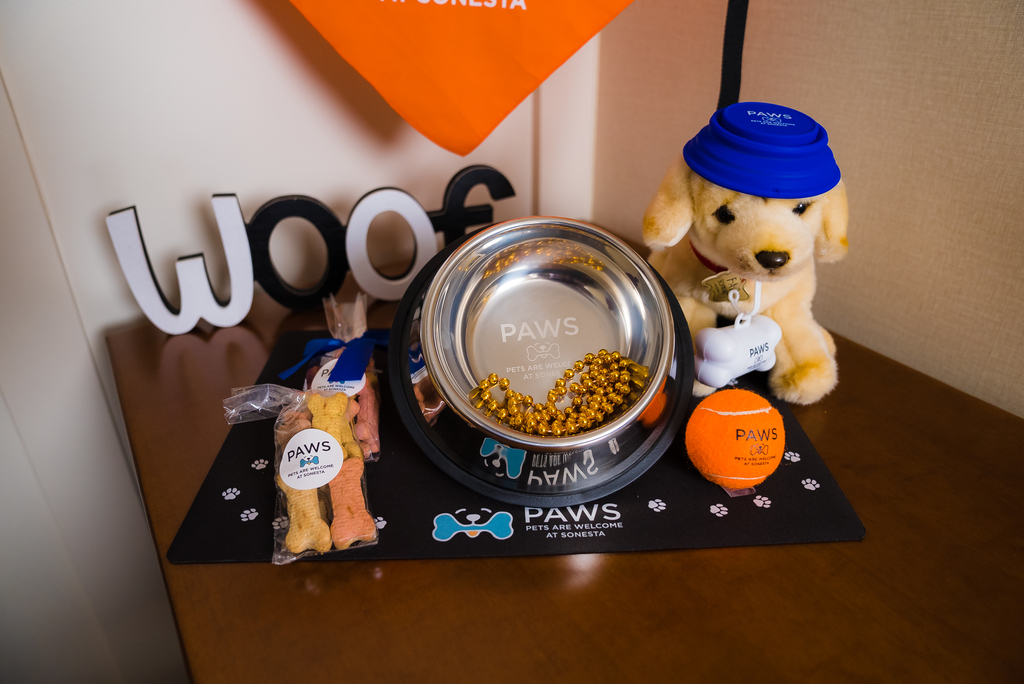
Sonesta PAWS Program covers breed restrictions, weight limits, fees, and in-room amenities across the full portfolio.
How Sonesta’s PAWS Program Works Across the Portfolio
PAWS, Pets Are Welcome at Sonesta, is a portfolio-wide pet policy with no breed restrictions and no weight limits. Most property types within the program accept pets of all sizes and breeds, though individual property exceptions may apply.
Sonesta Premium and Full-Service Properties
At Royal Sonesta, Sonesta Hotels and Resorts, and Sonesta Select properties, arriving pets receive a welcome letter, treats, a waterproof feeding mat, food and water bowls, and a dedicated pet bed.
The fee is a flat per-stay charge typically starting at around $75.
Sonesta Extended Stay Properties
At Sonesta ES Suites and Sonesta Simply Suites, the core PAWS amenities apply such as mats, bowls, and treats with a fee structure built around longer stays.
Guests typically pay $75 for stays up to 7 nights and $150 for longer stays. A 30-day stay carries the same $150 pet cost as a 10-day stay. At a standard hotel charging $40 per night, the same 30-day stay costs $1,200 in pet fees.
Economy and Select-Service Properties
Most locations within Americas Best Value Inn, Signature Inn, and Sonesta Essential Hotels brands, are pet friendly. Pet policies vary by property.
Call the specific property directly before booking to confirm species permissions, fee structure, and any restrictions that apply at the specific location.
Before confirming any pet-friendly booking, call the property directly and work through the ten questions above.
Booking platform listings show availability and price. Species restrictions, breed policies, fee breakdowns, and unattended pet rules come from the front desk directly. Two minutes on the phone before booking is the only reliable way to confirm the stay works for your pet before you arrive.
Disclaimer: The suggested itinerary and points of interest are provided for informational and planning purposes only. Guests are encouraged to independently verify opening hours, availability, travel times, and any potential changes prior to visiting. The inclusion of any businesses, attractions, or destinations does not imply affiliation with or endorsement by Sonesta or its affiliates. Sonesta makes no representations or warranties regarding the accuracy or completeness of the information provided and assumes no responsibility for any inconvenience or loss arising from the use of this information.