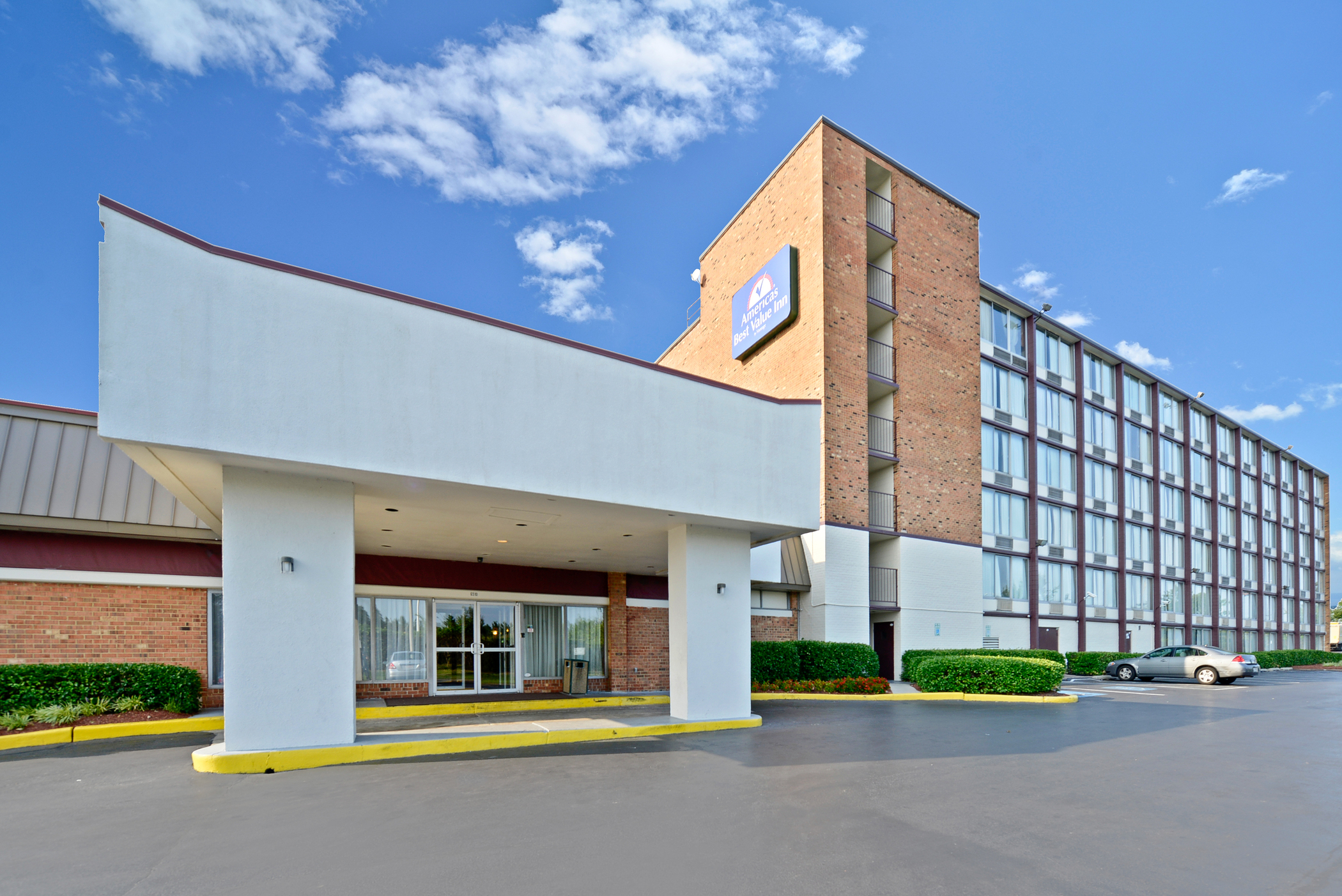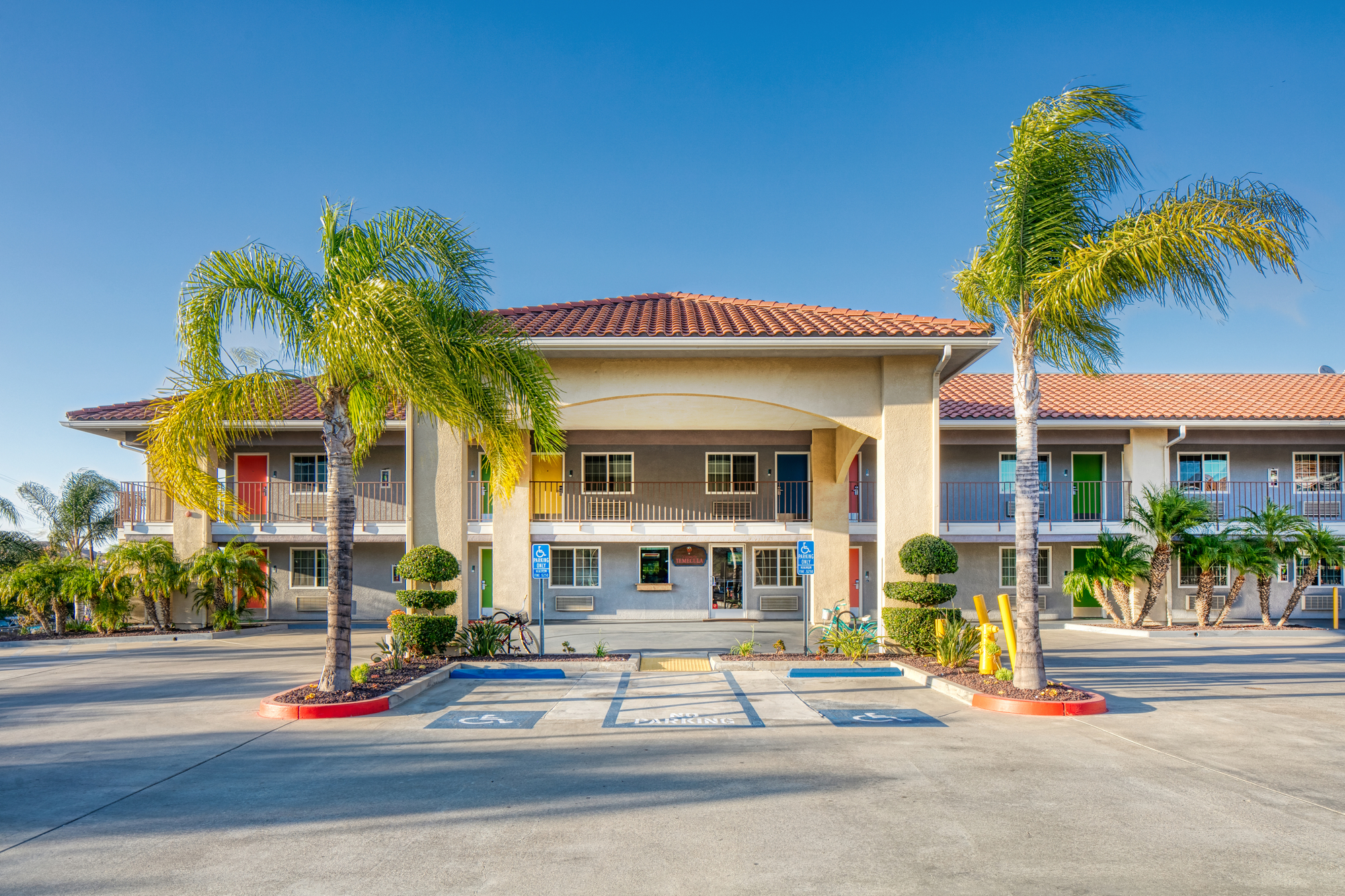
A budget hotel’s review score is shaped as much by category dynamics as by the property itself; a structural gap most travelers don’t account for when they book.
Budget hotel reviews are not a clean signal of quality. They are shaped by four specific reasons that push negative ratings higher across the entire category, regardless of how well a particular property is run.
The gap between expectation and experience is narrower at budget properties than at any other tier, and the review record reflects it with precision.
Here are the four main drivers of negative reviews and what to look for instead.
What Shapes a Budget Hotel’s Rating Before Anyone Checks In
Budget hotel reviews skew negative at a higher rate because budget travelers review differently when expectations aren’t met, not because budget properties fail more often than others.
It comes down to what each guest considers a broken promise.
Luxury travelers paying $400 a night expect everything to be right, down to the armchair. If something isn’t, they flag it at the front desk, get a fix, and move on.
On the other hand, budget travelers paying $89 a night have already made a trade, choosing the option with fewer amenities and simpler finishes in exchange for one thing: the basics that work. When the mattress is bad or the lock sticks, that trade feels violated. That’s when the one-star review gets written.
Knowing which specific reasons trigger that response is what separates a useful review read from a misleading one.
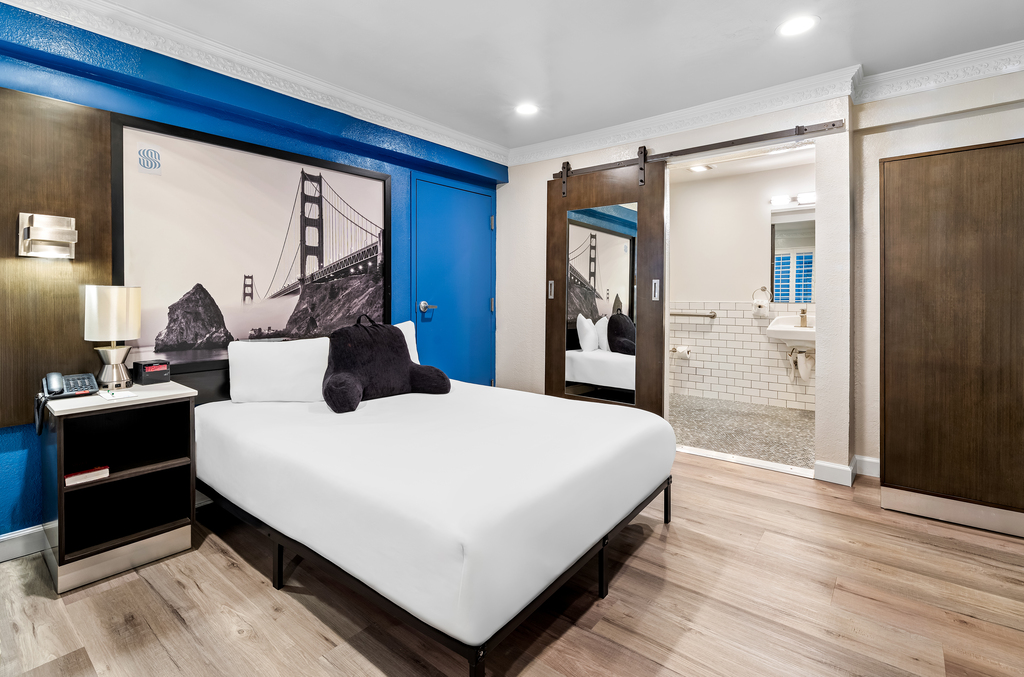
Standard room at Signature Inn hotel
Reason 1: The Room, the Bed, and the Bathroom Carry Disproportionate Weight
Negative reviews mentioning the bathroom reduce a budget hotel’s overall rating by more than 5%, more than almost any other single factor a guest can name, according to TrustYou research. Room and bed complaints follow at 3.5 points. These are among the biggest drivers of rating decline at platform scale.
Budget properties are more exposed to these complaints than mid-scale or full-service hotels because rooms and bathrooms wear faster under high-volume occupancy and get repaired more slowly.
When reading reviews, prioritize recency and pattern, not isolated incidents.
- Bathroom, bed, and room condition mentions are the highest-signal data points on any budget hotel’s review page
- A pattern of complaints in these areas over the last 90 days is a red flag
- A single mention from 14 months ago is not

Hotel lobby of Signature Inn hotel
Reason 2: Surprise Fees Produce Reviews That Look Like Quality Complaints
Budget travelers who discover an unexpected fee at checkout are more likely to leave a severe negative review than ones who experienced a substandard room, because the fee violates the specific reason they chose the property according to 2025 Taylor & Francis/Cogent Business & Management study.
Budget travelers chose that price point deliberately. A surprise parking charge or an undisclosed incidental deposit at checkout is a breach of the agreement they thought they had made when they booked.
That review rarely names the fee directly. To a reader scanning reviews, that language reads like a quality complaint, but in reality, it is a traveler describing a pricing transparency failure in the language of disappointment.
It’s a useful distinction to make, as a property with a cluster of fee-related complaints has a specific, fixable problem. What the room looks like, how comfortable the bed is, and how responsive the staff is remain entirely separate questions.
When reading reviews, prioritize:
- Mentions of checkout, fees, and final bill are a distinct category of complaint
- A pattern of surprise charges is a specific warning about pricing transparency, not room quality
- Reviews noting the final bill matched the booking price are an underrated positive signal
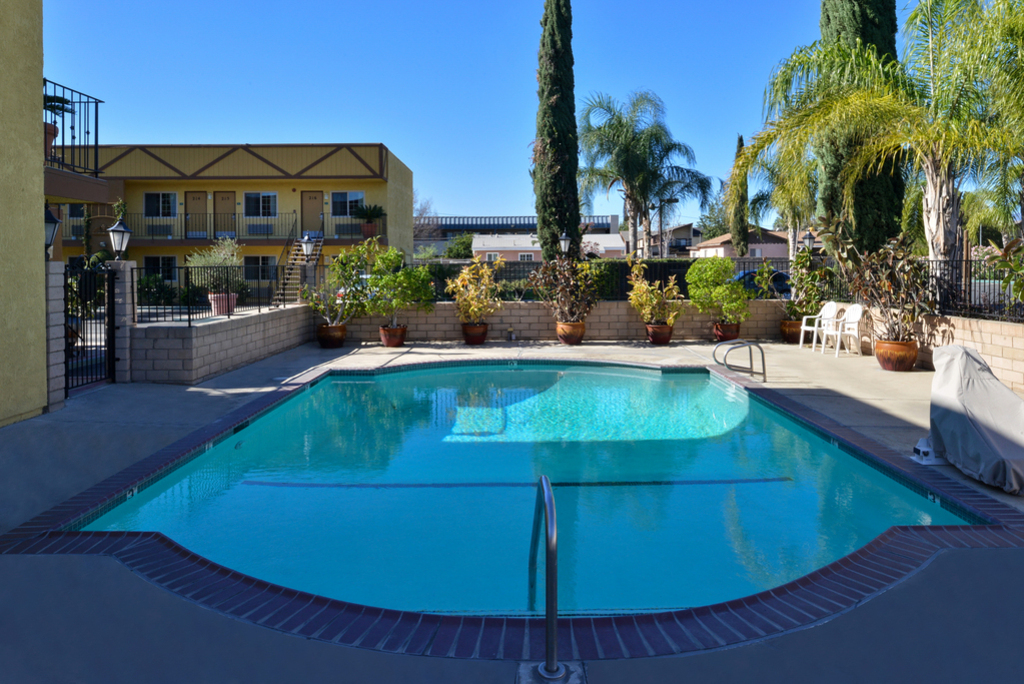
Outdoor pool at America Best Value Inn hotel
Reason 3: Operational Gaps Leave the Same Problems in Reviews for Months
Complaints from three months ago are more likely to still be present at a budget property than at a mid-scale one. Repairs cost money, and thin margins don’t always leave room for it.
Broken fixtures, a malfunctioning HVAC unit and a front desk chronically one person short are the predictable result of a property operating without the margin to fix what breaks.
Staffing complaints follow the same logic, but seem to hit harder. A small room and a basic breakfast are trades most budget travelers have already accepted. Midnight with no one at the desk is different. For many, it feels like the implicit agreement has broken down, so it produces more severe reviews than almost any physical shortcoming.
Both problems tend to share the same root cause: not enough means to address what needs addressing.
This is why the average score on a budget hotel’s review page can mislead you. It compresses two years of history into a single number. That average score can’t tell you whether a property improved two years ago or declined last month. It treats both the same.
When you’re reading reviews, two signals matter most:
- Recurring complaints across recent reviewers point to an unfixed problem.
- Consistent improvement over six to twelve months is a meaningful sign the property has changed.

Contientnal breakfast at Signature Inn hotel
Reason 4: Some Complaints Are About the Category, Not the Property
Many negative budget hotel reviews reflect a mismatch between what the traveler expected and what the category actually provides.
Budget hotels are a structurally different product from full-service hotels at a lower price. That distinction sounds obvious until you read a one-star review citing no room service, a shared laundry room, or a basic breakfast as the reason for the rating.
A traveler who books a budget hotel expecting a full-service experience at a budget price will leave a negative review that accurately describes their experience but tells the next reader nothing useful about whether the property is actually well-run.
What to look for when you are reading reviews:
- Read negative reviews for what specifically went wrong, not just the star rating
- Complaints about things the category doesn’t include by design are noise
🧳Next Chapter: What Budget Hotel Means in 2026: Pre-Booking Checklist
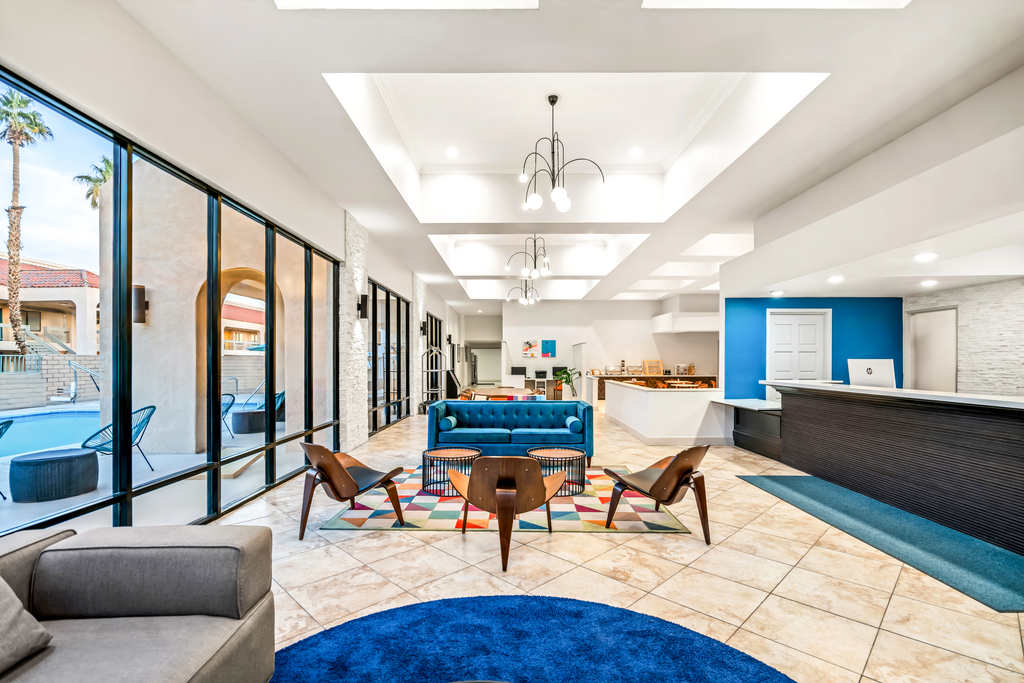
Hotel lobby of Signature Inn hotel
How to Read a Budget Hotel Review Page
A budget hotel’s review page contains more actionable information than its star average suggests, for a traveler who knows which complaint types to filter for and which to discard.
The six steps below take less than five minutes and will tell you more about a specific property than any overall score can.
Step 1: Sort by Most Recent
Skip the overall average. It is the least useful number on the page.
Sort by the last 30 to 60 days and read those reviews as a separate dataset. The property’s ownership, management, and maintenance could have changed over time, and the overall average absorbs those changes without reflecting them.
If the property has a string of positive reviews in the last two months, treat its review score of 6.5 / 10 differently than the one where the same complaint has shown up every week for a year. The only way to see that difference is to look at what guests are saying right now.
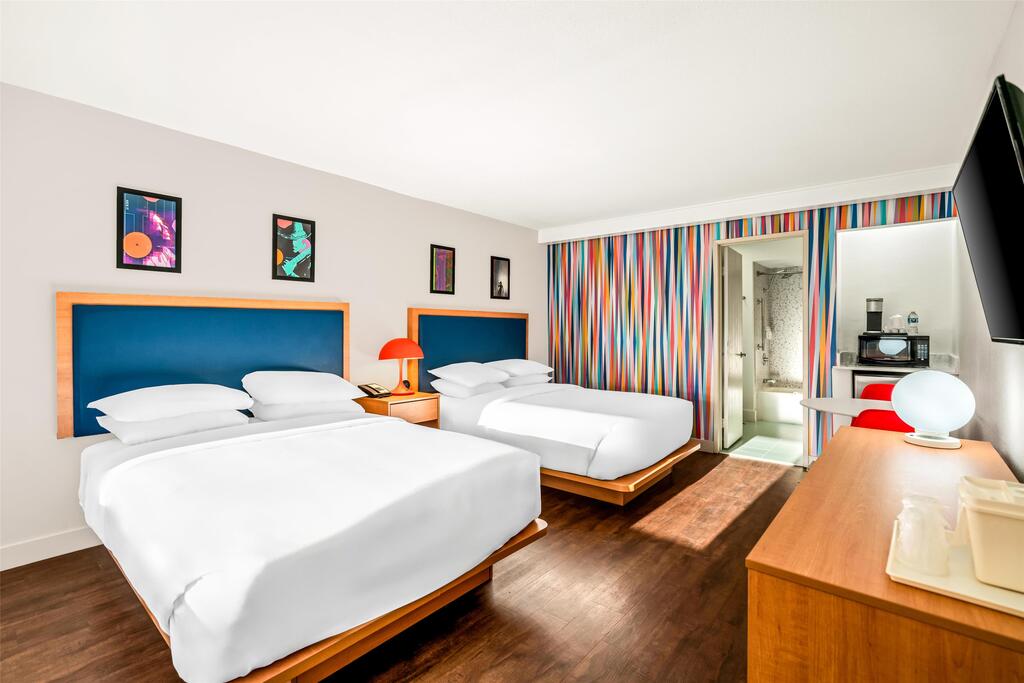
Guest room at Signature Inn Indio I-10 Coachella Valley
Step 2: Search for Bathroom, Bed, and Room Mentions
In those recent reviews, search for three words: bathroom, bed, and room. These are the complaint categories that move ratings the most, and they are the ones most likely to reflect what you will experience when you check in.
This is also where you can see the difference between properties that invest in the room and those that don’t.
For example, Signature Inn hotels invest specifically in room-level design, upgraded beds, and clean finishes, and that investment shows up directly in the reviews. Platform scores for Signature Inn properties range from 7.2 to 8.5, and the Signature Inn Indio I-10 Coachella Valley holds a 4.7 out of 5 on Google (June, 2026).
Step 3: Look for Fee and Checkout Mentions
Search the recent reviews for words like “charged,” “fees,” “checkout,” and “final bill.” A pattern of surprise charges is one of the most common triggers for a severe review at a budget hotel, and it is also one of the easiest problems to screen for before you book.
Before you read any fee-related reviews on a property’s page, check the inclusion list at booking. It tells you exactly what is in the base rate and what isn’t.
This is why our Americas Best Value Inn hotels usually include Wi-Fi, parking, continental breakfast, and a microwave and mini-fridge in the base rate, with pet fees, rollaway charges, and a refundable incidental deposit disclosed upfront.
Step 4: Check Whether Complaints Repeat
One bad review about a leaking faucet is noise. Three reviews about the same leaking faucet over two months is a property that hasn’t fixed it.
The difference between a one-off complaint and a recurring one is the most reliable signal on a budget hotel’s review page, and it is also the easiest to miss if you are only looking at the star rating.
Staffing complaints deserve particular attention. An absent or unresponsive front desk is one of the most common recurring complaints at budget properties, and one of the hardest to fix.
Americas Best Value Inn properties maintain a 24-hour front desk as a standard franchise requirement, which eliminates the most common version of that complaint loop.
In J.D. Power’s North America Hotel Guest Satisfaction Study, Americas Best Value Inn ranks near the top of the Economy segment for value-for-price performance, which means a platform score of 6.0 to 7.0 reflects competitive performance within the segment, not a signal of poor quality.

Exterior of Signature Inn hotel
Step 5: Read Management Responses
Management responses are among the most underread signals on a review page. How a property responds to a negative review tells you almost as much as the review itself.
A templated apology that says “we’re sorry you had this experience, please contact us directly” is not a response. It tells you the property received the complaint and chose not to engage with it.
A response that names the specific issue, explains what was done about it, and invites the guest back is a different signal entirely.
Signature Inn, for instance, operates under a corporate-monitored response model where complaints are addressed within 48 to 72 hours using property-specific responses rather than templated language. That response pattern is visible in the review record; look for it on any property you are seriously considering.
Step 6: Filter Category Noise
Not every negative review reflects a property failure. Some reflect a category mismatch, meaning that the traveler expecteded full-service amenities at a budget price point.
A one-star review citing no room service or a breakfast that was “just continental” is describing the category, not a failure of the specific property. That review is accurate, but it’s not a reason to avoid the hotel.
When you are reading negative reviews, ask yourself whether the complaint is about something the property did wrong or something the category simply doesn’t offer.
Complaints about cleanliness, a broken fixture, a staff member who wasn’t there when needed, or a room that didn’t match the photos are valid. Complaints about the absence of amenities that budget hotels have never included are noise.
🧳Next Chapter: Solo Female Travel on a Budget: How to Plan, Pack, and Save
Summary
A budget hotel’s review score reflects category dynamics as much as property quality. The key takeaways to help you understand what drives negative ratings and how to filter for the signals that matter, include:
- Sort by most recent reviews to see beyond the cumulative score
- Recurring complaints across recent reviews indicate an unfixed problem
- Bathroom, bed, and room mentions are the highest-signal complaint categories
- Surprise fees at checkout produce severe reviews that look like quality complaints
- Complaints about amenities the hotel category doesn’t include are noise, not warnings
- Management responses reveal how a property handles problems, not just whether they happen
Get to know Sonesta’s value stays:
Americas Best Value Inn
Locally owned and operated, Americas Best Value Inn properties are built around one commitment: the most comfort and convenience for every dollar spent. Many properties include Wi-Fi, parking, and continental breakfast in the base rate, with fees disclosed upfront. Check pan roperty pages or contact directly for up-to-date list of amenities and inclusions.
Signature Inn
Signature Inn brings something less common at this tier: design-forward rooms, upgraded beds, and staff attentiveness that shows up in the reviews. A little retro, a lot modern, and consistently rated above the segment average on the things that matter most to budget travelers.
Disclaimer: The suggested itinerary and points of interest are provided for informational and planning purposes only. Guests are encouraged to independently verify opening hours, availability, travel times, and any potential changes prior to visiting. The inclusion of any businesses, attractions, or destinations does not imply affiliation with or endorsement by Sonesta or its affiliates. Sonesta makes no representations or warranties regarding the accuracy or completeness of the information provided and assumes no responsibility for any inconvenience or loss arising from the use of this information.